
Every month at our Bali YTTC Yogashala , I sit down with students who have flown in from Germany, the USA, Australia, and beyond. Many of them tell me the same thing: they were on the verge of booking a €3,500 program at a luxury resort, but they couldn't shake the feeling that they were paying for the private pools and Instagram aesthetics rather than the yoga itself.
Deciding to enroll in a 200-hour yoga teacher training in Bali is a massive investment of both your time and hard-earned savings. You shouldn't have to carry a heavy financial burden just to experience authentic yoga. By understanding why certain schools charge high premiums and how other schools manage to keep prices sensible, you can choose a program that fits your budget without compromising on traditional Indian lineage or your Yoga Alliance US Certification.
The Ubud 200-Hour YTT Comparison Matrix
To help you visualize where your money actually goes, here is a transparent breakdown of how different yoga schools in Bali allocate their resources:
Parameter | Commercial Mega-Schools | Luxury Wellness Resorts | Bali YTTC (Value Focus) |
|---|---|---|---|
Average Course Fee | €2,800 – €3,200 | €3,200 – €4,000+ | €1,500 – €1,900 (Save 40%+) |
Batch Size | Large (35 – 50 Trainees) | Very Large (40 – 60 Trainees) | Small & Intimate (Max 12 – 15) |
Student-to-Teacher Ratio | Approx. 40:1 | Approx. 50:1 | Approx. 6:1 to 8:1 |
Hands-on Adjustments | Rare (Mostly verbal cues) | Occasional | Daily & Personalized |
Lineage Focus | Hybrid Hatha / Vinyasa | Modern Flow & Lifestyle | Traditional Indian Lineage |
Meals Included | Veg/Vegan Buffet | 3 Vegetarian Meals | 3 Ayurvedic Sattvic Meals Daily |
Why Is There Such a Massive Price Gap?
When you see YTT courses priced above €3,000, it is natural to assume that the training must be twice as good. However, in the yoga education industry, cost is rarely a direct reflection of educational depth. Instead, high prices are driven by three commercial factors:
1. Luxury Resort Leases (Paying for the Swimming Pool, Not the Yoga)
Many commercial schools do not own their training shalas. They rent out high-end, multi-million dollar luxury resorts in Canggu or central Ubud. A massive portion of your tuition fee goes directly toward paying the resort's mortgage, staff, and swimming pool maintenance rather than the salaries of the teachers.
2. Massive Global Advertising Budgets
The commercial giants run aggressive digital marketing campaigns. They pay search agencies and social media platforms thousands of euros every month to rank at the top of your feeds. These heavy acquisition costs are baked directly into the tuition fees of every student who registers.
3. Western Agency Brokerages
Many wellness programs hire western course coordinators, booking agents, and affiliates who charge up to 20% to 30% commission per booking.
The Bali YTTC Value Formula:
At Bali YTTC, we host our trainings in our own clean, peaceful Balinese-owned ashram-style shala. We keep our marketing budget minimal, work directly with our traditional Indian master teachers from Rishikesh, and eliminate third-party booking agents. By cutting out these commercial overheads, we pass the savings directly to you—offering the same internationally recognized 200-Hour Yoga Teacher Training in Bali for almost half the price.
Detailed Competitor Breakdown: Finding the Right Balance
To make an informed decision, it is important to understand the pros and cons of the different training models available in Ubud:
Evaluating Bali Yoga School 200-Hour Reviews vs. The Reality of Large Batches
Commercial mega-schools are highly popular and have beautiful, widely-shared Instagram aesthetics. Their facilities are standard and their teachers are often very experienced. However, when you dig into actual Bali Yoga School 200-hour reviews, a common theme emerges: the sheer volume of students per cohort.
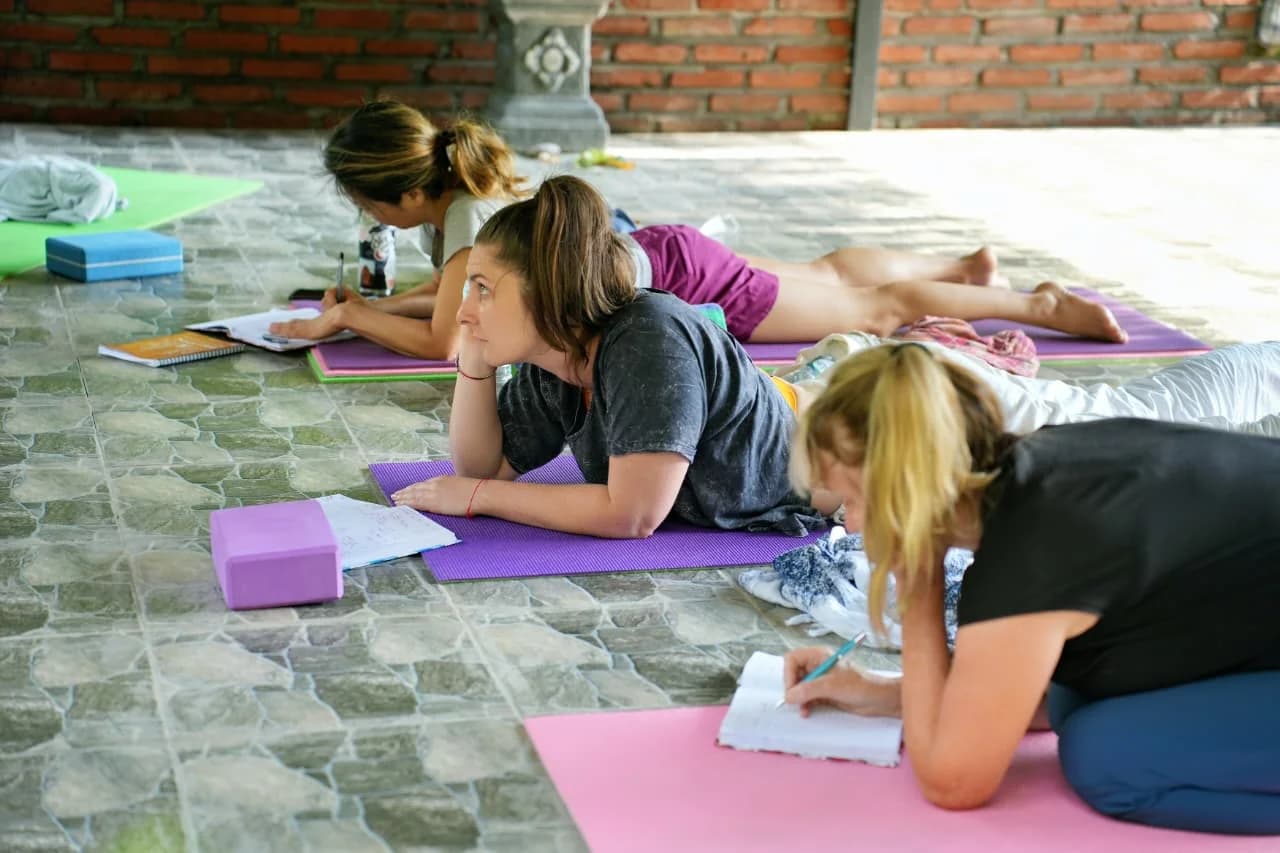
Because they operate as high-volume commercial centers, their batch sizes often range from 35 to 50 students. In a packed shala, it is physically impossible for a lead teacher to monitor everyone. This means you get very little individual alignment correction, personalized posture adjustments, or direct feedback during intensive adjustments.
Is Bali YTTC a Good House of Om Alternative?
Luxury wellness resorts focus heavily on the "luxury retreat lifestyle." You stay in premium eco-lodges, have access to sound baths, cacao ceremonies, and community healing circles. While the experience is beautiful, you are paying a high premium (€3,500+) for the resort amenities and community lifestyle rather than the depth of yoga education itself.
For students searching for a focused House of Om alternative, Bali YTTC provides an educational environment that prioritizes safety and lineage over commercial resort markups. We focus purely on the traditional, academic, and practical aspects of yoga in a smaller setting.
Why Bali YTTC is the Authentic Value Choice
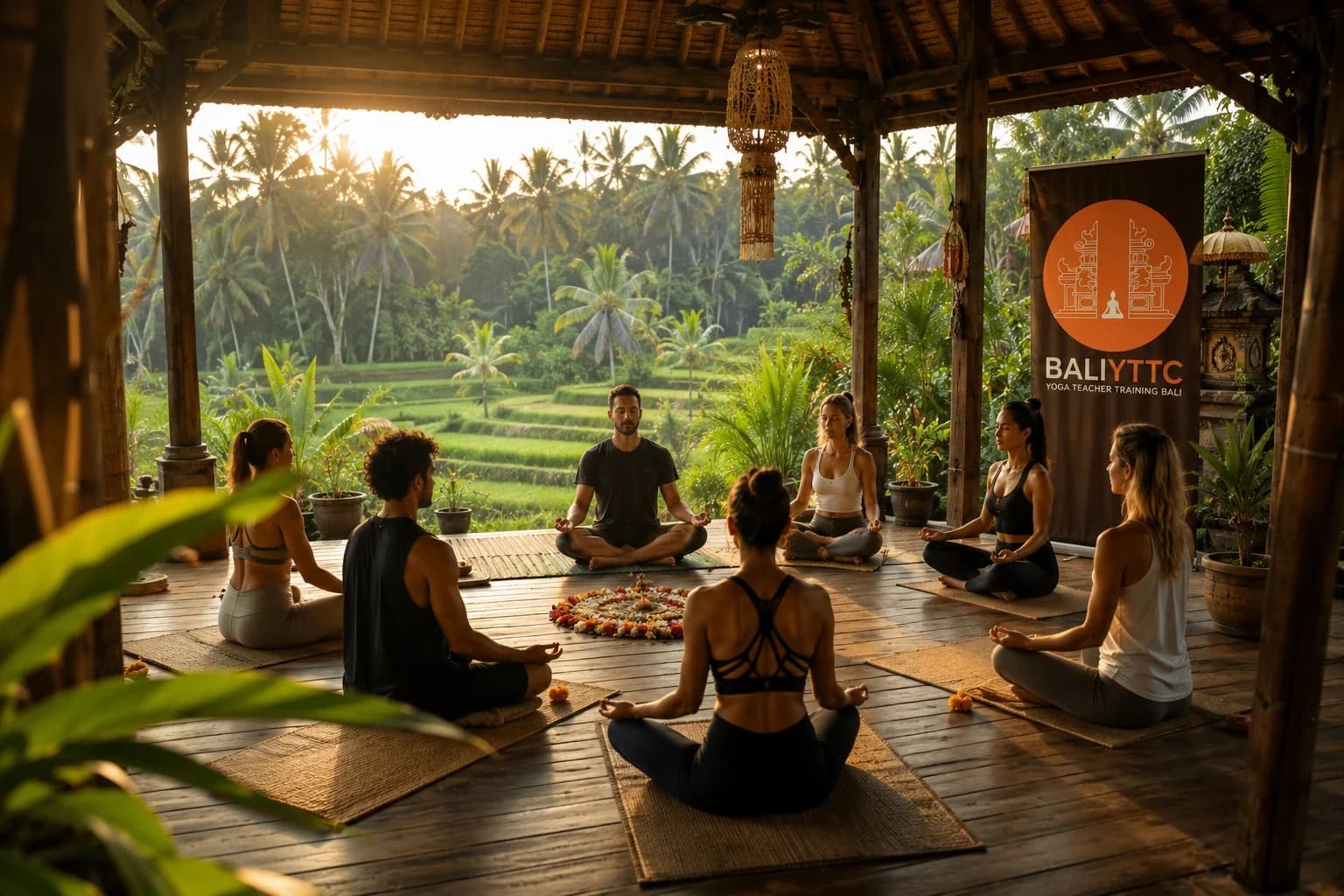
We focus purely on the educational, philosophical, and traditional aspects of yoga. We strictly limit our cohorts to 12 to 15 students. This ensures you get direct, daily mentorship from our experienced yoga instructors. In a small group, learning complex sequencing, anatomy adjustments, and pranayama is safe, focused, and personalized.
Why Small Batch Sizes Are Critical for Your Safety
In intensive physical practices like Ashtanga and Vinyasa Flow, posture safety is everything. When a class has 40 people, a teacher cannot spot when a student is hyperextending their knee or straining their lower back.
In our small-group format, our lead masters can observe every single trainee during practice. You receive hands-on adjustments and learn how to modify poses safely for different body types using blocks, straps, and bolsters. This is the difference between graduating feeling unsure of your alignment and graduating with the confidence to adjust others safely.
What is Included in Our Value Package?
Choosing an affordable YTT does not mean you have to compromise on the Balinese experience. A high-value program should include everything you need for a comfortable, focused month of study:
Complete Course Material: Detailed printed textbooks, sequencing manuals, and anatomical charts.
Daily Nutrition: Three freshly prepared Sattvic Ayurvedic vegetarian meals cooked daily with locally sourced ingredients.
Cultural Activities: Traditional Balinese excursions, including a sacred holy water temple purification ceremony at Sebatu or Tirta Empul.
Comfortable Stay: Accommodation in our green Ubud shala campus, complete with swimming pool, natural gardens, and daily housekeeping.
The Real Cost of Living in Ubud During YTT
When budgeting for your yoga teacher training, you need to look beyond the tuition fee. Here is a realistic breakdown of standard pocket expenses you will encounter in Ubud during a 3-week stay:
Local Sim Card (Data): €6 to €8 for 25GB of high-speed data.
Scooter Rental (Optional): €4 to €6 per day (local fuel costs about €1 per liter).
Local Massage/Spa: €8 to €12 per hour at traditional Balinese spas.
Weekend Dinners/Cafes: €4 to €7 per meal in local Warungs or organic health cafes.
Frequently Asked Questions About Bali Yoga Teacher Training
Why are some yoga schools in Bali so cheap while others cost over €3,000? Is there a catch?
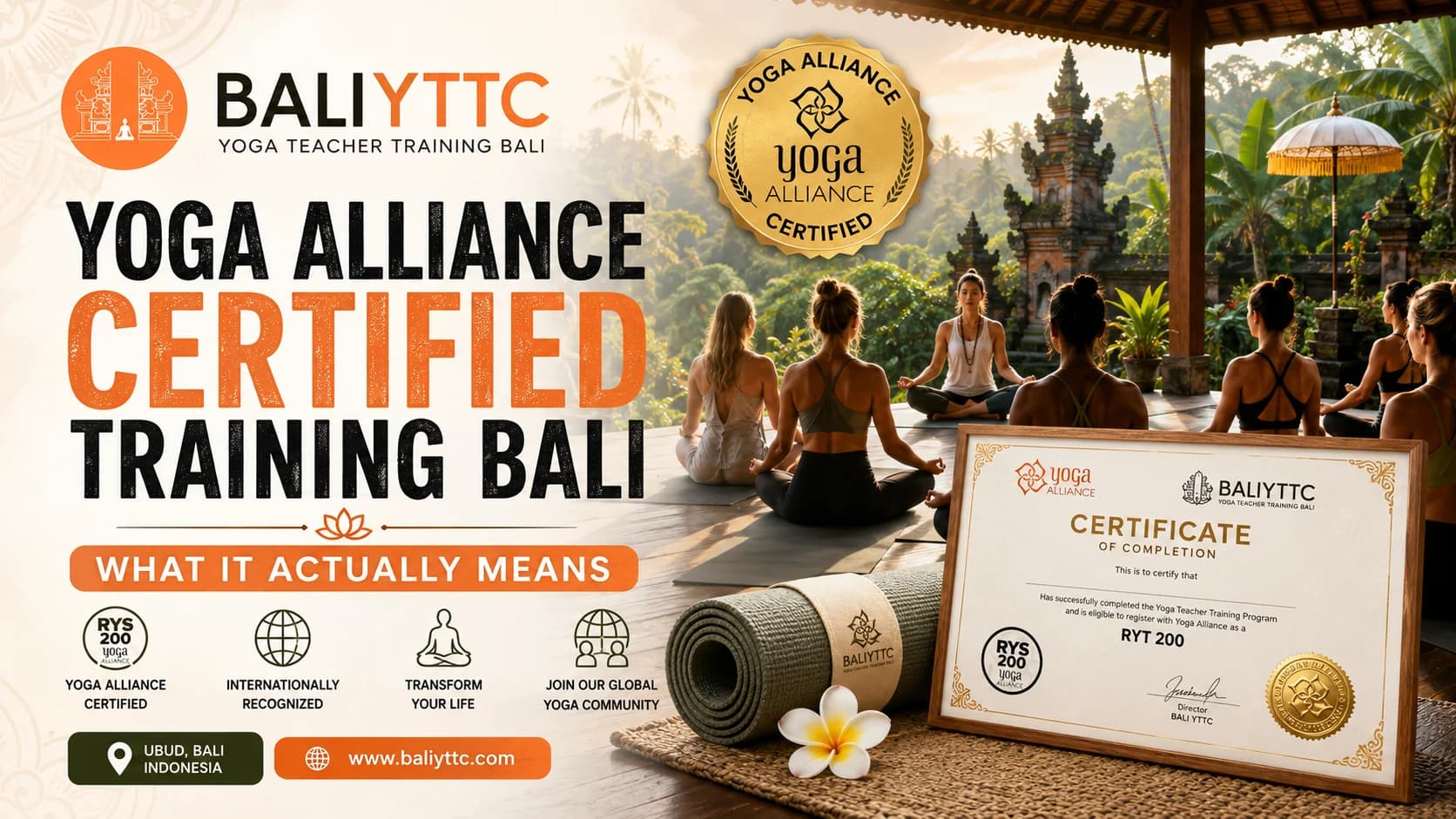
A: There is no catch. Schools charging €3,500+ are usually leasing luxury resorts (where a huge chunk of your money goes to the resort owner) and spending heavily on Instagram ads. Value-focused schools like Bali YTTC run out of their own Balinese-style shalas and hire Indian masters directly, saving massive middleman fees. You get the exact same Yoga Alliance certification.
I noticed every yoga school in Bali has 5-star Google/TripAdvisor reviews. How do I know which reviews are real?
A: Many large schools offer free merchandise, discount coupons, or extra excursions to students in exchange for a 5-star review on the last day of the course. To spot real quality, ignore the star rating and look at the specific details in reviews. Do they mention individual teachers by name? Do they talk about the batch size? If reviews mention "35 people in the class and couldn't see the teacher," that’s a red flag.
What are the actual hidden costs of YTT in Bali that schools don't list on their pricing page?
A: Typical hidden costs include:
Visa Extensions: If you stay longer than 30 days, the eVisa extension costs about €35 plus agent fees.
Laundry: Local laundry services charge €1-€2 per kilo (pack dry-wicking clothes to reduce laundry frequency).
Water & Dinners: Some schools do not include weekend meals. Make sure your school provides unlimited filtered water to avoid buying plastic bottles.
Airport Pickups: Taxis from Denpasar Airport to Ubud can cost €25-€35 if not included.
Note: At Bali YTTC, airport pickup, all course manuals, unlimited drinking water, and temple purification entrance fees are fully included in the standard price.
Can I actually teach right after graduating, or is a 200-hour YTT just a glorified yoga holiday?
A: You can teach, but only if the school focuses on Practical Teaching Methodology. Some schools spend 80% of the time on philosophy and chanting, leaving students with only 2 hours of actual practice teaching. At Bali YTTC, you begin practice teaching your peers in week one, accumulating over 15+ hours of real lead-instruction experience before you graduate.
What happens if I get sick or catch 'Bali Belly' during the intensive training?
A: Almost 30% of travelers get mild stomach upsets in their first week. If you miss a class, large commercial schools with 50 students might not catch you up. In our small 12-student batches, teachers will sit with you individually to catch you up on missed anatomy or philosophy modules once you recover.
Secure Your Seat in Our Next Ubud Cohort
To preserve our high standards of safety and personalized mentorship, we strictly limit each batch to 12 to 15 trainees. Applications are processed on a first-come, first-served basis. No discount codes or artificial price drops. Just transparent, direct-to-school pricing.
Visit Our Ubud Sanctuary

Written by Vivek Kalura
Senior Faculty & Cultural Scholar. Guiding students to connect mechanical adjustments with spiritual lineage under the tropical Ubud foliage.
Become a Certified Teacher
Study anatomy, philosophy, and alignment in our immersive Ubud programs.